You’ve probably had the same three tabs open we see on every discovery call. Zoho in one, Salesforce in another, and somewhere in the middle a half read review of SugarCRM, which by the way isn’t even called that anymore. And you’re trying to work out which one to trust, when most of what’s written about Zoho vs Salesforce vs SugarCRM was written by someone who gets paid the moment you sign up for one of them.
We don’t. FieldSoft doesn’t take reseller commission from Zoho, Salesforce or anyone else. We get paid for the work, not for pointing you You’ve probably had the same three tabs open we see on every discovery call. Zoho in one, Salesforce in another. Somewhere in the middle sits a half read review of SugarCRM, and nobody calls it that anymore. You’re trying to work out which one to trust. Most of what’s written about Zoho vs Salesforce vs SugarCRM comes from someone who gets a payout the moment you sign up.
We don’t. FieldSoft takes no reseller commission from Zoho, Salesforce or anyone else. We get paid for the work, not for pointing you at a badge on our website. So everything below is what we’d actually tell a client sitting in our office.
First, a name change you need to know about
If you’ve been bookmarking SugarCRM comparisons for the last year, here’s something that’ll throw you off. In April 2026, SugarCRM rebranded to SugarAI. The company is the same. So are the products underneath it: Sugar Sell, Sugar Market and Sugar Serve kept their names. But the parent brand now leads with AI positioning instead of the old “system of record” language. Their CEO put it plainly: CRM has to help teams take the right action, not just store data.
We’ll call it SugarAI (formerly SugarCRM) through this piece. That’s genuinely what it is now, and half the search results you’ll find still use the old name.
What you’re actually choosing between
Before the pricing, it helps to know what each platform is built to be good at. “Which CRM is best” is the wrong question. The right one is “which CRM is best at the thing my business actually does.”
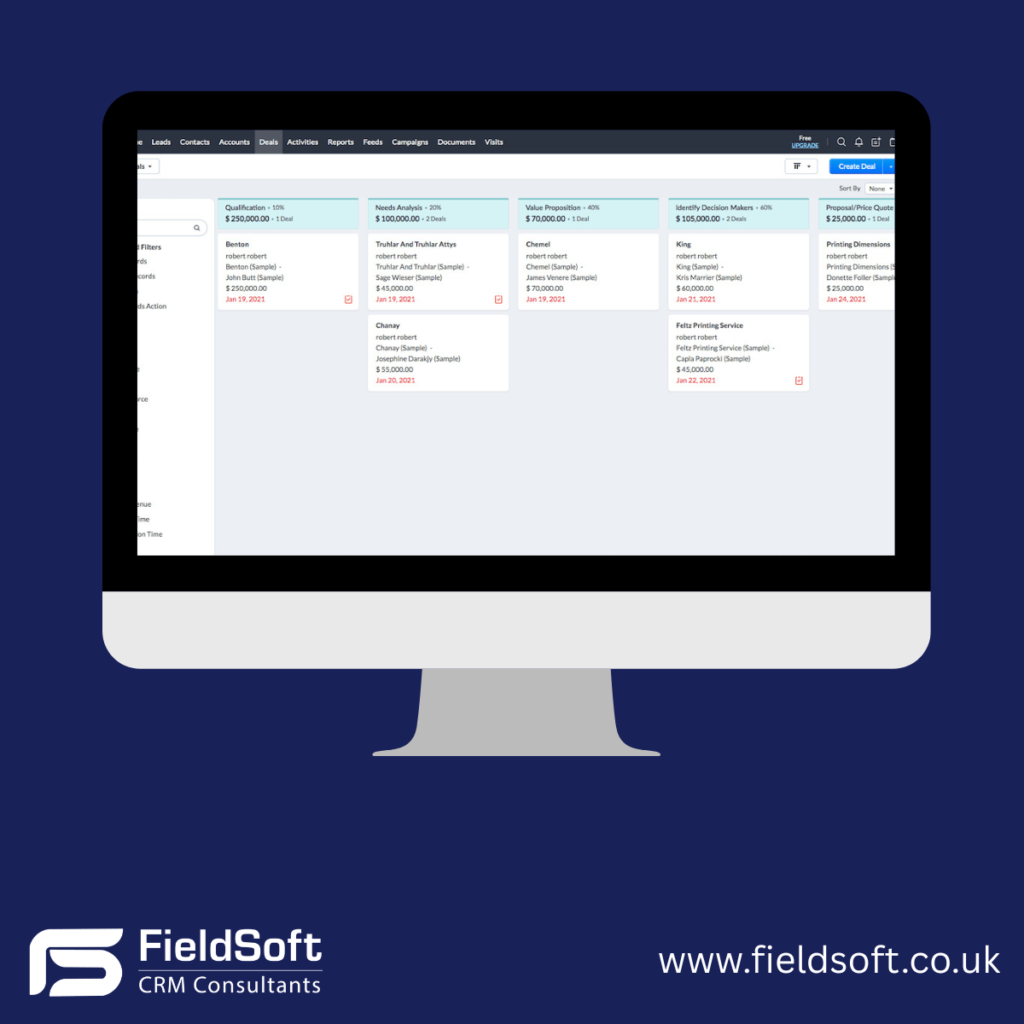
Zoho CRM sits inside Zoho One, a suite of over 40 connected apps covering finance, HR, projects, marketing and support. Zoho built it for businesses that want their CRM talking to invoicing, helpdesk and project tracking. No stitching three separate vendors together yourself. It’s also the platform we specialise in, so take that as read.
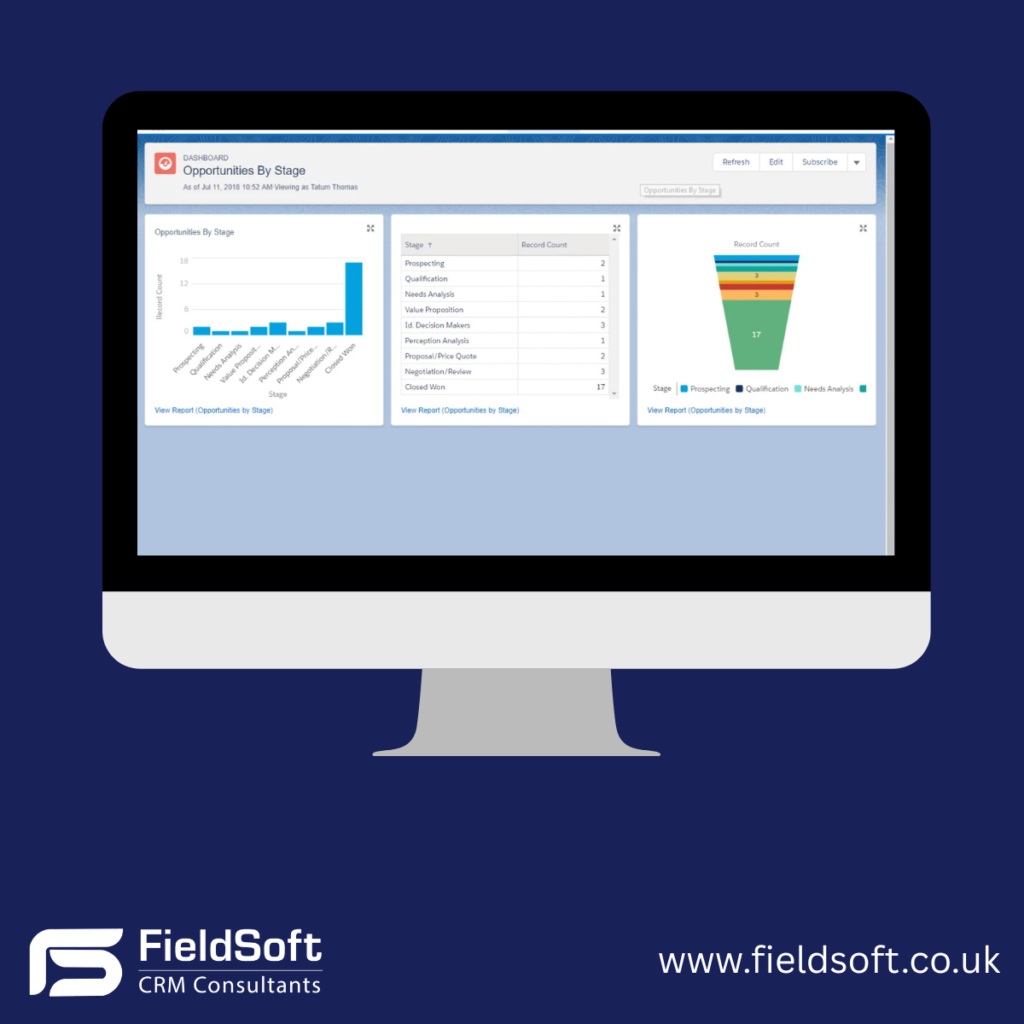
Salesforce is the enterprise standard. It’s endlessly customisable and has the biggest partner and developer ecosystem of the three. It also now bundles Agentforce, its AI layer, into the higher tiers. That flexibility comes at a price, and we mean that literally.
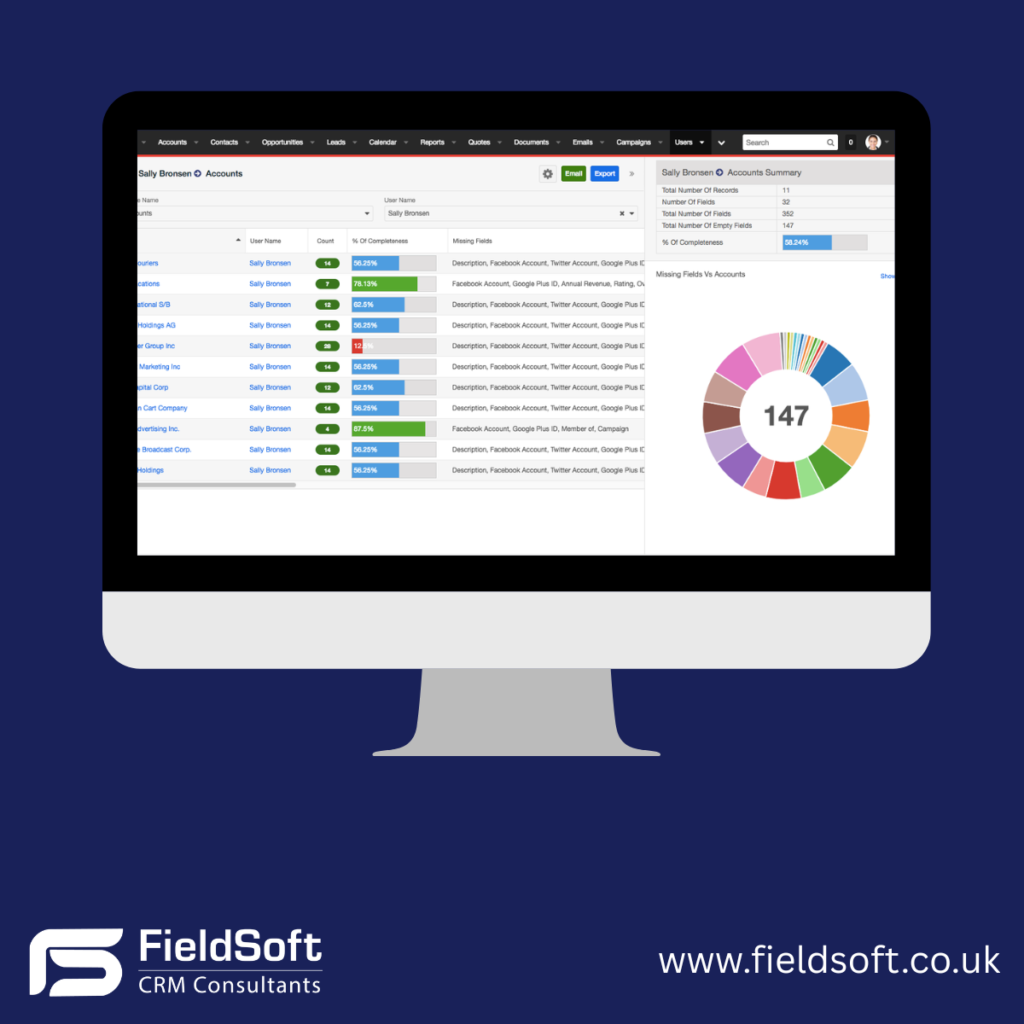
SugarAI targets complex, relationship heavy B2B sales, particularly manufacturing and distribution. It’s the smallest of the three by market share. And it comes with a catch we’ll get to shortly, one that trips up a lot of small teams.
Zoho One and Zoho CRM Enterprise pricing
We’re giving you Zoho One’s pricing here rather than the basic Zoho CRM tiers. That’s genuinely what we recommend to most clients. Comparing a bare CRM to Salesforce and SugarAI isn’t a fair fight anyway. Zoho One is the CRM plus the other 40-odd connected apps. It usually costs less than CRM alone. Add up what you’d otherwise pay for separate invoicing, helpdesk and HR tools, and the gap gets bigger.
In GBP, billed annually per user per month:
- Zoho One, All Employee Pricing: £37 (every employee on payroll needs a licence, not just sales)
- Zoho One, Flexible User Pricing: £80 (licence only the staff who need it)
- Zoho CRM Enterprise (CRM only, no Zoho One): £35
Enterprise at £35 a seat is the CRM-only tier that actually competes on features with Salesforce and SugarAI. It’s the one that includes Zia AI, custom modules and field level encryption. Standard and Professional sit below it and cost less. But they’re lighter tiers built for smaller, simpler setups. We wouldn’t put them up against the other two platforms here.
Salesforce Sales Cloud pricing
From Salesforce’s own UK pricing page, billed annually, per user per month:
- Starter Suite: £20
- Pro Suite: £80 (annual billing only)
- Enterprise: £140
- Unlimited: £280
- Agentforce 1 Sales: £440
Look at that jump from Starter to Pro Suite. That’s a 4x price increase the moment you need quoting, forecasting or anything beyond the absolute basics. Plenty of businesses hear the low number in the sales deck. They end up paying the high one within a year.
SugarAI pricing
Sugar Sell, per user per month:
- Advanced: £68
- Premier: £108
Here’s the catch we mentioned. SugarAI has historically required a 15 user minimum. A 6 person sales team can end up paying for 15 seats regardless. Confirm the current minimum with them directly before you sign anything. We’ve seen it move before. And these GBP figures come from a UK public sector pricing listing rather than SugarAI’s live site.
The cost of getting this wrong
You asked us for a real number on what it costs to pick the wrong platform and have to re-migrate. Honestly, we went looking for a clean statistic to hand you and couldn’t find one worth trusting. You’ll see “70% of CRM projects fail” quoted everywhere. We traced that claim back and it doesn’t hold up. Gartner cites 50%, Forrester cites 47%, and various blogs cite everything from 30% to 70%. None of them link back to a study you can actually read. The most recent version we found came from a single company’s own unpublished survey, with no sample size disclosed anywhere. We won’t hand you a number we can’t stand behind, and you shouldn’t trust anyone who does.
What a bad platform choice actually costs
Here’s what we can tell you, because we’ve sat in the room while it happened. It’s several bills stacked on top of each other, not one.
First, you pay for the wrong platform’s subscription while you’re still on it. Then you pay for the new one during the migration overlap, running two systems at once for a while. Someone, internally or externally, has to clean and map the data before it moves. Nothing migrates cleanly first time. Your sales team loses weeks of accurate pipeline visibility. They end up working from memory and spreadsheets instead of the CRM, because nobody trusts a half migrated system. And you pay for retraining twice: once on the platform you’re leaving, once on the one you’re moving to.
We’ve seen re-migrations happen for one of two reasons. Either the business bought Salesforce because it’s the “safe” enterprise choice, then never used half of what they paid for. Or they bought into SugarAI’s 15 seat minimum for a team of 8. Then they quietly bled money for two years before someone asked why. Both are avoidable with an honest conversation before you sign, not after.
Which one actually fits your business
Zoho wins on cost and integration most often, in our experience. That’s the case if you’re already running other parts of the business on Zoho One. It’s also the case if you’d rather have one connected system than five separate subscriptions.
Salesforce earns its price tag for a large, complex sales org, one with a dedicated admin and budget to match. That’s especially true if you genuinely need the depth of customisation. Just go in with eyes open about that Starter to Pro Suite jump.
SugarAI’s AI led “next best action” approach fits manufacturing and distribution businesses best. Think a sales team of 15 or more, running long, relationship driven deal cycles. Under 15 people, check the current minimum before you get attached to the feature list.
None of that is a sales pitch for Zoho dressed up as neutral advice. It’s just where the maths lands most often, for most businesses we talk to.
Get an honest answer before you sign anything
We’ll look at your actual sales process, your team size and what you’re already running. Then we’ll tell you straight which platform fits and which doesn’t, including if the answer isn’t Zoho. Book a free 30 minute platform fit call and find out before you sign a contract, not after.
Prices correct as of 18th August 2026. Vendors change pricing without much notice, so confirm current figures before you budget against any of these.